
Sail4th 250 Tall Ships NYC: Why This Is the Most Significant Sailing Event (And Why Every Sailor Should See It from the Water)
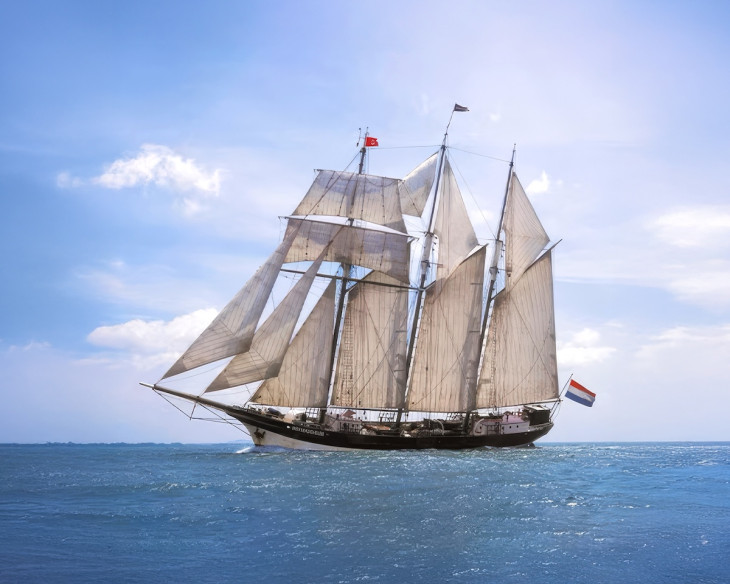
The Sail4th 250 tall ships parade is part of America’s 250th anniversary celebration, bringing historic sailing vessels from 20 nations to New York Harbor July 3–8, 2026. Captain Martin shares why this maritime once-in-a-lifetime moment is best experienced on a sailboat.
Starting at $1,000 for up to 6 guests | July 3–8, 2026 | Departs Chelsea Piers
Quick Answer: The Sail4th 250 tall ships parade, part of America’s 250th anniversary celebration, brings more than 30 historic and traditional sailing vessels from 20 nations to the New York Harbor from July 3–8, 2026. For sailors, it’s a rare chance to witness working examples of the vessel types that defined maritime history under full sail all together in the same waters. Captain Martin, who has sailed New York Harbor for over 30 years, explains why this event is unlike anything else in the modern sailing calendar, and why the only way to truly experience it is on a sailboat.
I’ve been sailing New York Harbor for more than three decades. I’ve watched the sun come up over a glassy Hudson River in April. I’ve navigated through fog so thick you could wring it like a towel. I’ve had the harbor to myself on a Tuesday afternoon in November, and I’ve threaded a hundred boats on a July afternoon. I know these waters the way you know a room in a house you’ve lived in for thirty years — by feel, by sound, by the way the current shifts underneath.
And I am telling you: I have never been this excited about anything happening on this harbor in my professional lifetime.
The Sail4th 250 tall ships parade is a maritime once-in-a-lifetime moment. The NY Harbor will be filled with historic and traditional vessels to mark America’s 250th anniversary. For the sailors who don’t find their way to the water to see it, they will regret it.
Let me tell you why. Then I’ll tell you what we’re doing about it.
Why the Tall Ships Hit Different When You’re a Sailor
There’s a version of the tall ships experience that’s available to anyone: stand on a pier, watch the masts move past, take some photographs, and go get a hot dog. That’s a fine afternoon, and I have nothing against a hot dog, but sailors watch tall ships the way musicians listen to live performances; with a layer of comprehension that changes the experience entirely.
When a non-sailor watches a gaff-rigged schooner arrive in the harbor with her sails set, they see something beautiful and impressive. When a sailor watches the same thing, we see the beauty, yes, but we’re also processing the trim of the sails, the way the helmsman is managing the approach, the number of crew it takes to handle lines of that scale, what the wind is doing at the top of a rig that’s 100 feet above the waterline. You’re reading the boat the way an artist reads paint strokes.
That fluency doesn’t make the experience less emotional. It makes it more so. Because you know what you’re looking at.
A gaff-rigged schooner sailing wing-on-wing down the East River is not a museum piece; it is a living moment built on a sailor’s understanding of wind, tide, and how the canvas and rope respond to the conditions. I don’t just see a historic vessel, I feel it, in the part of my chest that knows what it means to feel a sailboat heel into the wind. Seeing these tall ships is a reminder of the ancient way humans have moved across the Earth.
What These Ships Actually Are — and Why They’re Remarkable
The Sail4th 250 fleet brings together vessel types that represent centuries of sailing evolution. These are some terms you’ll hear and what they actually mean from a sailor’s perspective:
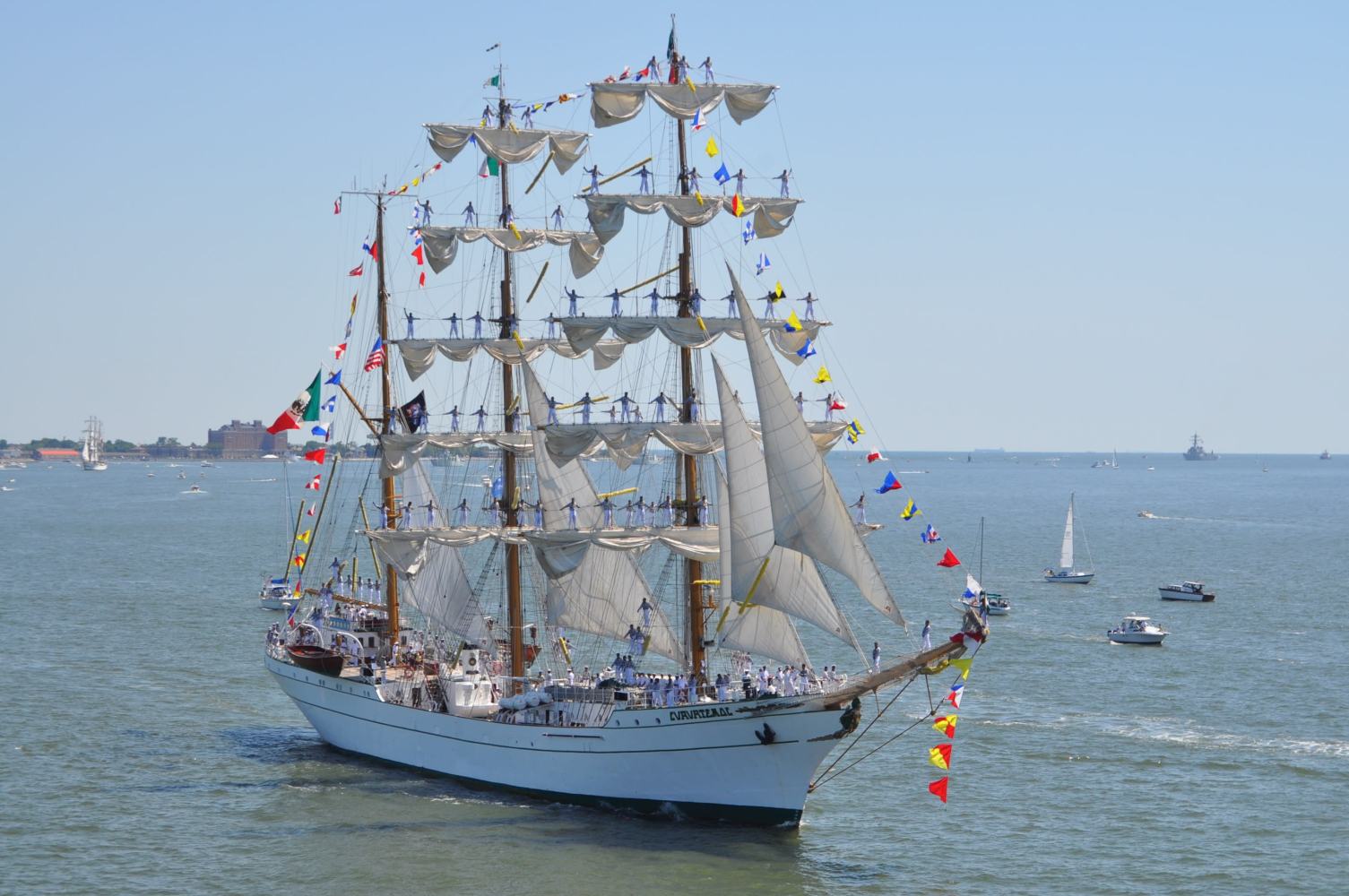
Square-riggers
These are the grandes dames of sail that most people picture when they imagine the age of exploration. Their square sails are set perpendicular to the vessel’s centerline, making them exceptional downwind performers but requires serious skill for upwind work. Watching a square-rigger tacking, something they do not do gracefully or quickly, is a masterclass in crew coordination. Every maneuver requires multiple people handling multiple lines in a precise sequence. There is no autopilot. There are no shortcuts. There is only seamanship.
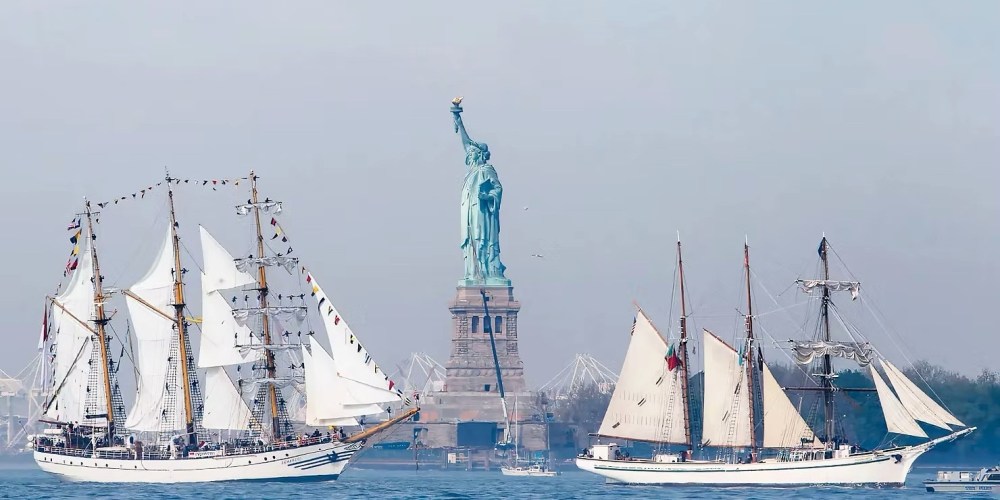
Gaff-rigged schooners
These workhorses of American maritime history dominated the Eastern Seaboard for centuries for their use in coastal trading, fishing, and smuggling (let’s be honest about the full résumé). The gaff rig is fore-and-aft rather than square, meaning these boats can sail closer to the wind. They’re more maneuverable than square-riggers, but they’re not recreational sailboats; maintaining a large schooner rig demands constant attention and a crew that knows the boat intimately.
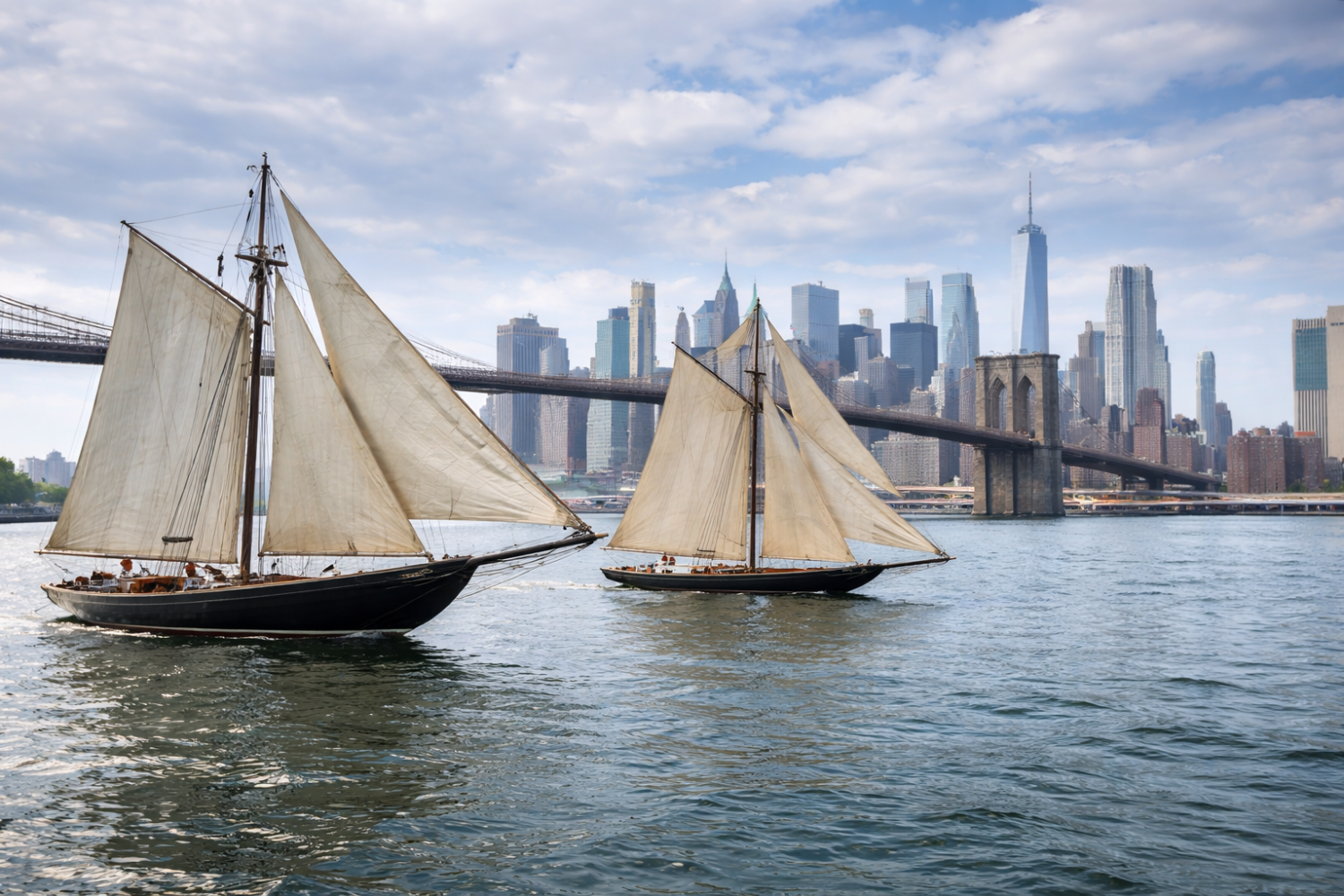
Ketches, yawls, and brigantines
Each of these type of vessels have a different nautical balance of power, control, and manageability across a range of conditions. Every rig was refined over generations of ocean sailing, and represents accumulated wisdom that modern fiberglass and electronics have not fully replaced.
What they all share: they are working vessels. They move under sail the way their predecessors did. Keeping them seaworthy requires a lot of skill, commitment, and elbow grease.
The Love and Labor Behind Every Tall Ship
Here is what most spectators watching a tall ship sail past don’t think about: the extraordinary amount of work that preceded the moment they’re witnessing.
A wooden tall ship is not a static object. The sea, the salt, the sun, and the load of a rig are what gives it wings to fly over the water, and also the same elements that cause it sink. Sailors of tall ships keep these vessels sailing out of a love that borders on devotion.
On a large square-rigger, the running rigging (ropes) can total miles in combined length. It stretches, wears, chafes, and needs regular inspection and replacement. The standing rigging (shrouds, stays, and backstays that hold the masts in place) is under constant tension and must be maintained with the understanding that a failure at sea isn’t an inconvenience, it can be catastrophe. Wooden planking must be caulked and inspected. Iron fittings corrode. Sail canvases require constant repairs.
The organizations and crews that keep these vessels afloat and sailing are custodians of something irreplaceable. They are keeping alive both the boats and the knowledge of how to maintain and sail them. It’s a skill set that exists in very few places in the world and cannot be reconstructed from books or AI if it’s lost.
When I see a tall ship sailing into New York Harbor, I feel a specific kind of respect for the generations of sailors who cared enough to keep the vessels going. That’s not a small thing.
Why New York Harbor Is the Right Stage
I am, admittedly, not a neutral observer when it comes to New York Harbor. I’ve spent thirty years learning to love its particular character — its tides, its light, the wind tunnels gusting between skyscrapers, the way the harbor opens up as you come around the Battery and suddenly you’re in a space that feels genuinely vast.
But even accounting for my bias: there is no better stage in America for this event.
The harbor is large enough to host a fleet of this scale without crowding. The approaches — the Narrows from the south, the East River, the Hudson — give the tall ships distinct theatres for different days and different parade formats. The backdrop of the Manhattan skyline is, simply, the most recognizable urban waterfront in the world. When square-rigged masts appear against those towers, the juxtaposition is the kind of thing that doesn’t require any explanation.
And there’s history here. This harbor received the tall ships of the world in 1976 for the Bicentennial’s Operation Sail which remains one of the most watched events in American television history. The harbor has that memory built into it. The 250th anniversary is the right moment, and the harbor is the right place.
What It Means to See It from the Water
I’ve thought a lot about why this distinction matters so much to me — why watching the tall ships from a private sailboat is categorically different from watching from the shore.
Part of it is practical. From a fixed point on land, you see the parade from one angle, for a limited window of time, with whatever crowd has assembled around you. Your view is static. The boats move past and are gone.
From the water, you are part of the event itself. The same wind that fills the sails of the tall ships is filling your sails. The same tide they’re navigating, you’re reading too. You’re not a landlubber watching from a distance. You’re sailing as part of this impressive fleet, and there’s a sense of kinship in that.
For guests who aren’t sailors, you will also feel connection on a smaller sailboat. You will feel the scale of these vessels differently at water level while the tall ships move past. The bow of a large square-rigger approaching is not a detail; it’s an event.
Why This Won’t Happen Again in Our Lifetimes
The 1976 Bicentennial Operation Sail happened fifty years ago. If you miss Sail4th 250, the next one will be in 2076. I will be well past my sailing days in 2076, if things go to plan. Possibly, so will you.
I mention this only because it’s the honest framing for what Sail4th 250 represents. This is not a “catch it next year” situation. The fleet assembles once, the anniversary happens once, the harbor fills with tall ships once, and then the vessels go back to their home ports and the harbor returns to its ordinary, magnificent self.
I’ve been out on this water on enough ordinary days to love those too. But there are days that are not ordinary, and July 3 through 8, 2026 are some of them.
What We’re Doing for Sail4th 250 Week
We’ve built out a full charter schedule across all six days of the festival — morning, afternoon, sunset, and night departures — specifically structured around the official Sail4th 250 event calendar.
The July 4th Parade of Sail charter is the one I’m most personally looking forward to. We’ll be on the Hudson River as the full fleet passes the Statue of Liberty, through the NY Harbor and up the Hudson River.
We’re also sailing the July 3rd Tall Ships Class B parade. It’s a festival of slightly smaller vessels sailing down the East River through the New York Harbor. for , a format that almost never happens on the modern harbor. The July 3rd evening Preview Sail, assembles the fleet during the golden hour. The parades are followed by an illuminated night charter, which is its own kind of spectacular. And festival week charters from July 5 through 8, are available when the ships are still docked in New York and the pace is more relaxed and exploratory.
Champagne and catering can be ordered with your charter. We’ll take care of the rest.
Frequently Asked Questions About the Sail4th 250 Tall Ships Parade
What is a tall ship, exactly?
The term “tall ship” refers to a large traditionally-rigged sailing vessel including square-riggers, schooners, barques, brigs, brigantines, ketches, and yawls. The Sail4th 250 fleet includes working examples of most of these rig types from organizations and maritime heritage programs around the world.
Why do sailors admire tall ships so much?
For sailors, tall ships represent the full depth of maritime seamanship at a scale and complexity that modern recreational sailing doesn’t require. Watching a large square-rigger tack, or a schooner hoist her sails for a downwind run, is watching centuries of accumulated knowledge in action. There’s also deep respect for the organizations that keep these vessels sailing. The ongoing maintenance and crewing of a working tall ship is a significant undertaking driven by genuine love for these boats.
What types of tall ships will be in the Sail4th 250 parade?
The Sail4th 250 fleet includes vessels from 20 nations representing a range of traditional rig types: square-riggers, gaff-rigged schooners, ketches, yawls, and brigantines among them. Some are maritime heritage vessels maintained specifically to keep traditional sailing knowledge alive. Specific vessels will be confirmed by official Sail4th 250 event organizers.
What’s the difference between the July 3rd Class B parade and the July 4th Parade of Sail?
The July 3rd Class B parade features traditional smaller vessels (under 131 feet in length) sailing down the East River from Hell Gate Bridge through the harbor. The July 4th Parade of Sail is the centerpiece event: the full international fleet sailing up the Hudson River from the Verrazano-Narrows Bridge to the George Washington Bridge. Both are official Sail4th 250 events. Both offer extraordinary viewing from the water.
Is the Sail4th 250 tall ships parade a ticketed event?
The tall ships parade itself takes place on public waterways and is viewable from shore. Private sailboat charters offer water-level viewing as part of official Sail4th 250 week. Your charter is private for you and your guests only.
How is this different from the 1976 Bicentennial Operation Sail?
Operation Sail 1976 brought more than 50 tall ships to New York Harbor for the Bicentennial and remains one of the defining maritime events in American history. Sail4th 250 marks the 250th anniversary, the next major milestone, and the first comparable gathering of tall ships in the harbor in five decades.
When should I book to guarantee availability?
The July 4th Parade of Sail and July 3rd Preview Sail charters have the most limited availability. Booking as early as possible is strongly recommended for those specific dates. Festival week charters (July 5–8) have more departure options. All dates are limited to 6 passengers per charter.
Ready to See the Tall Ships from the Water?
Thirty years on this harbor have given me a long list of extraordinary moments. July 2026 is going to add several more. I hope you’ll join us for one of them.
July 3–8, 2026 | Starting at $1,000 for groups | Up to 6 guests | Departs Chelsea Piers
View the full Sail4th 250 charter schedule →
Questions or custom requests? Call or text us: 917-399-9084
— Captain Martin, Go Sailing NYC
USCG 100-Ton Master Captain | 30+ years sailing New York Harbor | Chelsea Piers since 2018